

Summary
22 items · 45 minutes to 2 hours
How to find drafts before you seal anything
Working through this checklist room by room takes less time than most homeowners expect. The goal is to locate every place where outdoor air enters unchecked, then match the right seal to each gap. Before buying materials, spend 10 minutes on a cold or windy day walking through the house with a lit incense stick or a damp hand held near frames, sills, and thresholds. Smoke that wavers or skin that feels cool tells you exactly where to start.
Common leak points fall into a few categories: the moving parts of doors and windows (where weatherstripping sits), the fixed edges of those frames (where caulk belongs), and penetrations through walls or ceilings for pipes and wires. This checklist addresses all three. For a broader picture of how weatherstripping fits into annual upkeep, see the month-by-month seasonal maintenance reference.
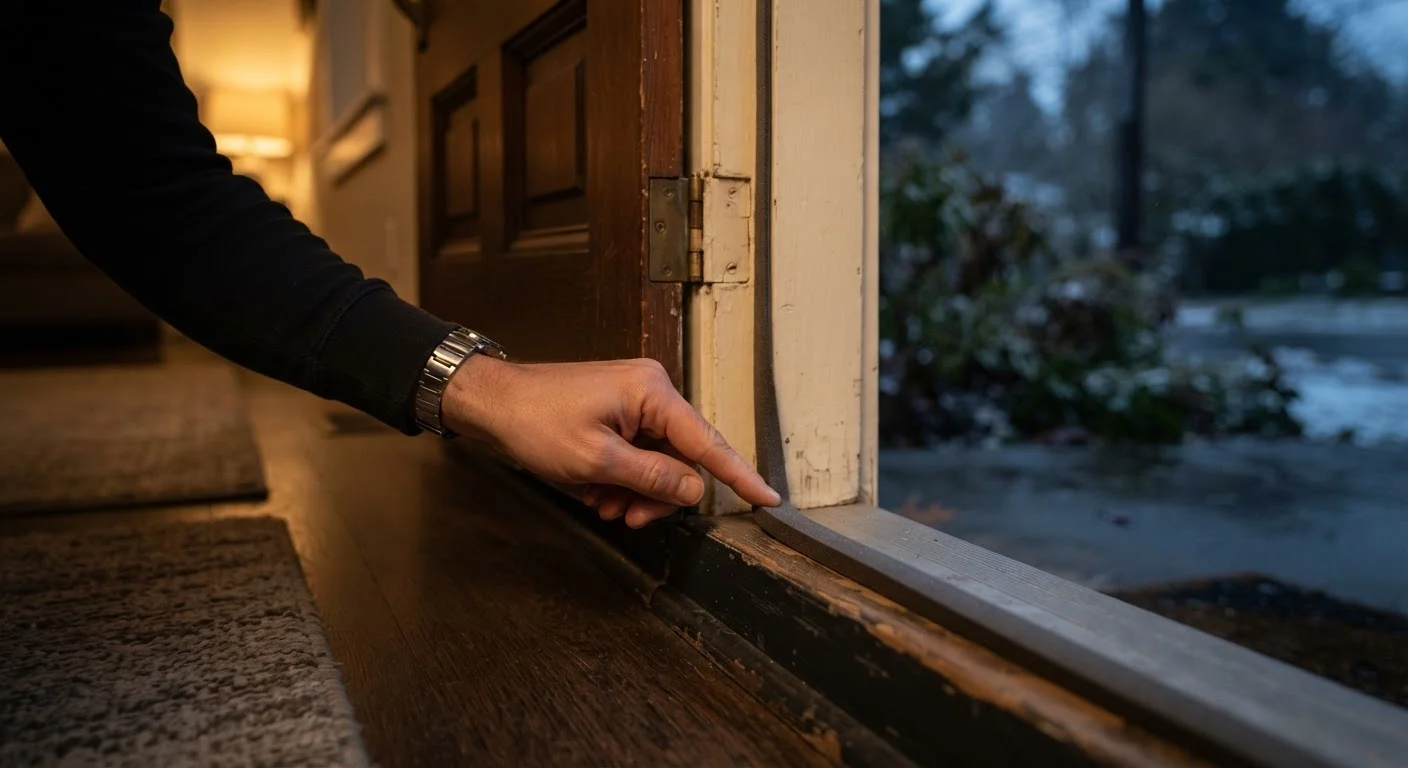
Foam weatherstripping tape
Seals compressed gaps on door stops and window sashes where surfaces press together.
V-strip (tension seal) weatherstripping
Fits into door and window channels for a durable seal that holds up to repeated opening and closing.
Door sweep
Attaches to the bottom of exterior doors to block the gap between the door bottom and threshold.
Rope caulk
Temporary, peel-off bead pressed into window sash joints for seasonal sealing without permanent adhesion.
Foam outlet gaskets
Thin pre-cut foam inserts placed behind electrical outlet and switch covers on exterior walls.
Expanding foam sealant
Fills larger gaps around pipe and wire penetrations through exterior walls or floors.
Incense sticks or a damp hand
No-cost method for detecting air movement before and after sealing to confirm gaps are closed.
Room-by-room checklist
Work from the most exposed areas inward. Exterior doors and windows lose the most heat per square foot, so complete those groups first. Attic and garage entries matter more than most people realize because air that moves through those zones travels directly into conditioned living space.
Exterior doors
Windows
Attic hatch or pull-down stairs
Garage entry door and garage door
Utility penetrations and outlets
Fireplace and HVAC
Do not block combustion air vents
Gas furnaces, water heaters, and fireplaces need a controlled supply of combustion air to operate safely. Never seal the dedicated air intake vents or louvers that serve these appliances, even if they feel drafty. If you are unsure which vents are combustion intakes, contact a licensed HVAC technician before sealing anything near fuel-burning equipment.
If you find caulk that is already cracking or pulling away from frames, replace it before adding new weatherstripping. Weatherstripping works on moving joints; caulk handles fixed gaps. Using one where the other belongs shortens the life of both. Our guide on why caulk fails before winter explains the preparation steps that make the biggest difference.
Once you have finished, re-check every sealed area with the incense or damp-hand test. A gap you missed on the first pass often becomes obvious after nearby gaps are closed, because air pressure redirects through whatever opening remains. For tasks that go beyond weatherstripping into wall or attic insulation, review what insulation work is genuinely DIY-friendly before proceeding.
The content provided on our blog site traverses numerous categories, offering readers valuable and practical information. Readers can use the editorial team’s research and data to gain more insights into their topics of interest. However, they are requested not to treat the articles as conclusive. The website team cannot be held responsible for differences in data or inaccuracies found across other platforms. Please also note that the site might also miss out on various schemes and offers available that the readers may find more beneficial than the ones we cover.