

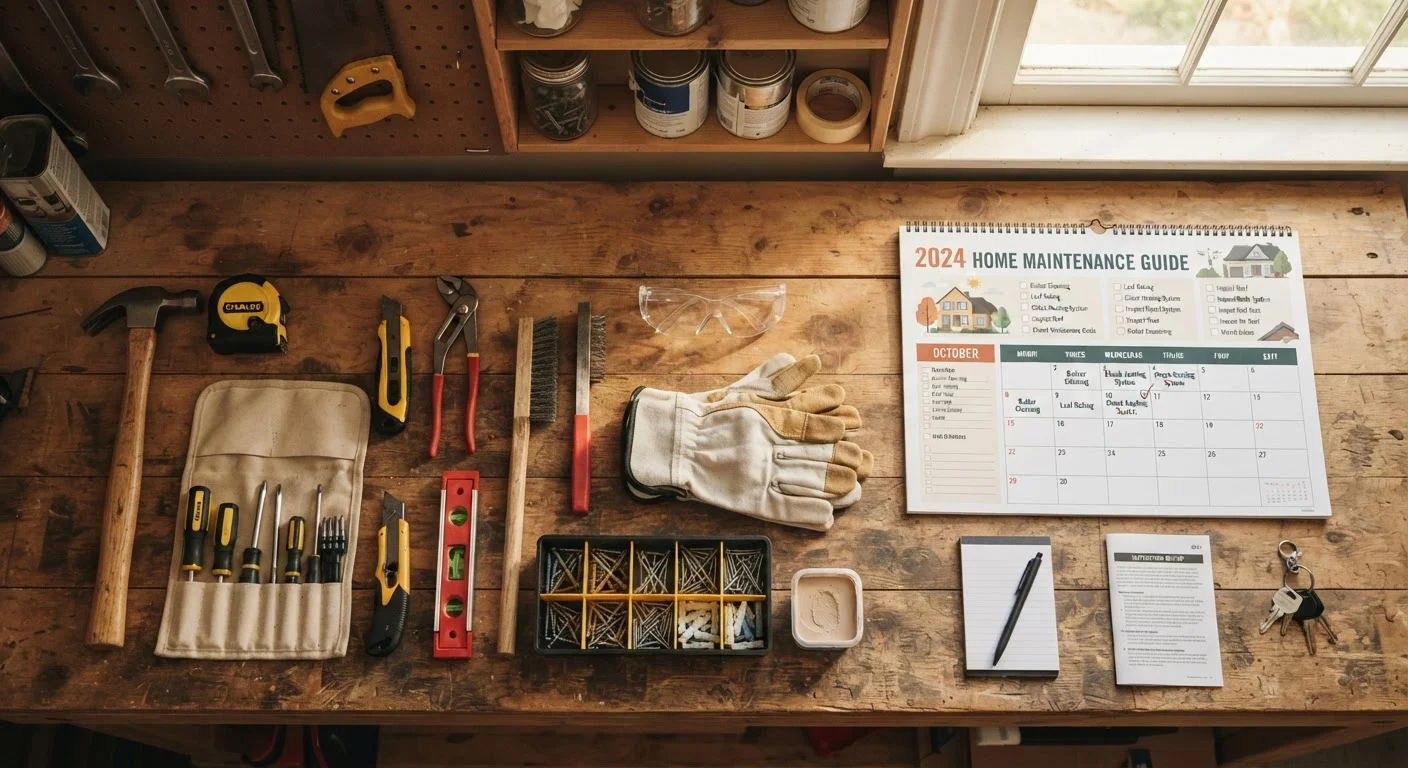
Why a monthly schedule beats reactive repairs
Most home repair costs come not from catastrophic events but from deferred upkeep. A clogged gutter leads to fascia rot. An unchanged HVAC filter strains the motor. A small gap around a door frame lets conditioned air bleed out month after month. Catching each of these at the right time costs a few minutes; missing them can cost hundreds of dollars.
This reference organizes the most common preventive tasks by month so you can plan ahead rather than scramble. Tasks are grouped where seasonal timing matters most. Some recur; most take under an hour. Where any task involves your electrical panel, gas lines, structural elements, or main plumbing connections, consult a licensed professional and verify local permit requirements before proceeding.
Seasonal maintenance pairs well with a broader household budget. See our household budget framework for guidance on setting aside funds for irregular home expenses.
Winter and early spring (January through March)
January: Inspect weatherstripping on all exterior doors and windows. Gaps wider than a credit card allow significant heat loss. Our room-by-room weatherstripping checklist walks through every common entry point. Check exposed pipes in unheated spaces such as garages and crawl spaces; insulating foam pipe wrap is inexpensive and straightforward to apply.
February: Replace HVAC filters. Standard 1-inch filters need replacement every 60 to 90 days; thicker media filters vary by manufacturer guidance. Check your smoke and carbon monoxide detector batteries. Test each unit by pressing the test button.
March: Walk the perimeter of your home after the last hard freeze. Look for cracks in the foundation, gaps around utility penetrations, and any frost heave that has shifted walkway slabs. Check the attic for signs of ice dam damage: water stains on rafters or insulation that has been pushed aside.
Spring and early summer (April through June)
April: Clean gutters and downspouts after pollen season peaks. Test downspout extensions to confirm water drains at least 6 feet from the foundation. Inspect the roof from the ground with binoculars; look for missing shingles, lifted flashing around chimneys, and granule loss. Hire a licensed roofing contractor for any close inspection or repair work at height.
May: Service the air conditioner before the first hot stretch. Turn off power at the disconnect box, then clear debris from around the outdoor condenser. Change the filter if you have not done so since February. Schedule a professional tune-up if the unit is more than five years old.
June: Caulk gaps around windows, door frames, and where different exterior materials meet (such as wood siding abutting brick). Exterior caulk breaks down from UV exposure and temperature swings. Probe old beads with a fingernail; if they crumble or pull away easily, scrape and re-caulk. This is also a good time to check bathroom caulk and grout around tubs and showers.
Late summer and fall (July through October)
July and August: Inspect window and door screens; patch small holes with screen repair tape or replace full frames. Check the dryer exhaust duct from the exterior cap back to the machine. Lint accumulation in this duct is a leading cause of household fires. Disconnect the duct at the machine end, vacuum it out, and confirm the exterior flap opens and closes freely.
September: Seal gaps around utility entries (gas lines, cable, plumbing) and along the base of the foundation. Mice can enter through openings the diameter of a pencil. Use steel wool packed into gaps before applying foam or caulk; rodents chew through foam alone.
October: Clean gutters again after leaves fall. Flush downspouts with a garden hose. Drain exterior hose bibs and disconnect garden hoses before the first freeze. Restock your HVAC filter supply and replace the current filter. Check your home's electronics and appliances for dust buildup around vents before heating season raises internal temperatures.
GFCI outlet
Ground-fault circuit interrupter outlet. It monitors current flow and shuts off power within milliseconds if a ground fault is detected, reducing electric shock risk. Required by electrical code in wet areas such as bathrooms, kitchens, and garages.
Ice dam
A ridge of ice that forms at the roof edge when heat escaping from the attic melts snow, which then refreezes at the cold overhang. Water backed up behind the dam can seep under shingles and cause interior water damage.
Hose bib
The outdoor threaded faucet where you attach a garden hose. It must be drained and shut off from the interior supply valve before freezing temperatures arrive to prevent the pipe from bursting.
Creosote
A tar-like byproduct of burning wood that deposits on chimney walls. It is combustible and can ignite inside the flue if allowed to accumulate, causing a chimney fire.
MERV rating
Minimum Efficiency Reporting Value. A scale from 1 to 16 that measures how effectively an air filter captures particles. Higher MERV filters trap smaller particles but restrict airflow more, so match the rating to your system's specifications.
Late fall and year-round tasks (November through December)
November: Have the chimney and fireplace inspected and swept by a certified chimney professional before regular use. Creosote buildup is a fire hazard that is not visible from inside the firebox. Test the fireplace damper for smooth operation. Check the furnace igniter and burners; if the flame burns yellow rather than blue, call an HVAC technician before running the system through winter.
December: Test all GFCI outlets (ground-fault circuit interrupter outlets common in bathrooms, kitchens, and garages) by pressing the test and reset buttons. Replace any that do not reset. Inspect the water heater for corrosion around the base and at pipe connections. Flush the tank if it has not been flushed in over a year to remove sediment that reduces efficiency.
Year-round tasks (every 1 to 3 months): Replace HVAC filters on schedule. Test smoke and CO detectors. Check under sinks for slow drips. Wipe down refrigerator condenser coils once or twice a year. These small habits keep larger systems running longer and reduce the chance of a repair arriving without warning. Budgeting for home upkeep alongside other recurring household costs, as outlined in our household expense audit guide, can help families absorb these costs without stress.
The content provided on our blog site traverses numerous categories, offering readers valuable and practical information. Readers can use the editorial team’s research and data to gain more insights into their topics of interest. However, they are requested not to treat the articles as conclusive. The website team cannot be held responsible for differences in data or inaccuracies found across other platforms. Please also note that the site might also miss out on various schemes and offers available that the readers may find more beneficial than the ones we cover.