

Start here
Why raised beds make sense for budget gardeners
Next
Choosing low-cost materials that last
Then
Sizing your bed for the space and what you want to grow
When you're ready
Filling the bed with soil that actually works
Finally
Keeping costs down year after year
Why raised beds make sense for budget gardeners
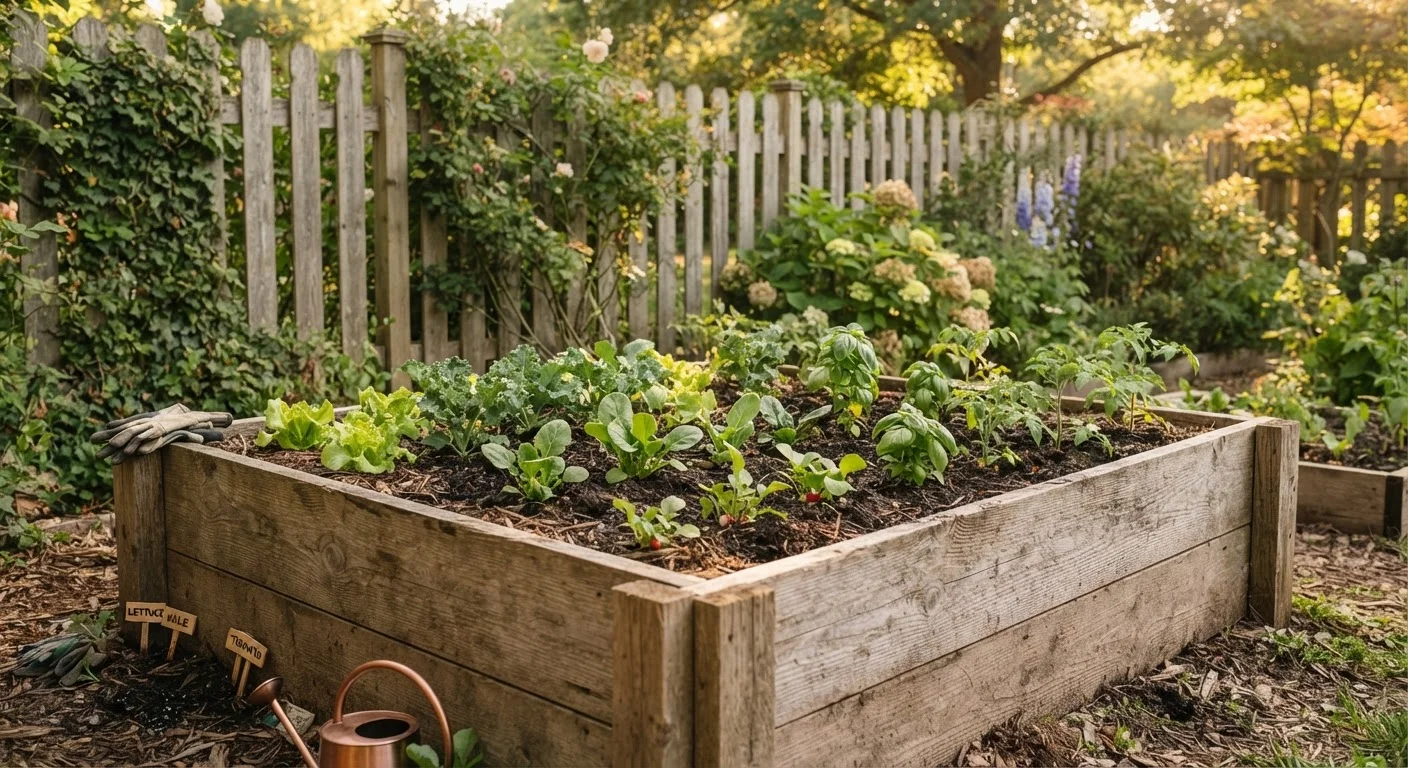
Native soil in most American yards is not ideal for growing food. It may be compacted from foot traffic, low in organic matter, or contain clay or sand in proportions that drain poorly or hold too much water. A raised bed lets you skip the years of amendment it can take to improve ground soil and start with a mix that works from the first season.
The productivity gain can also help offset grocery costs over time. A 4x8 bed planted with tomatoes, peppers, and herbs can supply a family with a meaningful amount of fresh produce across a summer, which connects directly to strategies like those in our guide to cutting grocery spending. The upfront cost of building and filling the bed is the main barrier, and that is where smart material and soil choices matter most.
Choosing low-cost materials that last
Lumber is the most accessible frame material for most people. Standard 2x6 or 2x8 boards from a home center are inexpensive and easy to cut. Doubling them to 2x10 or 2x12 height adds depth without requiring specialty lumber. Pine is the least expensive option and typically lasts five to eight years before the boards begin to deteriorate. Cedar costs more per board but can last 15 or more years without treatment, which makes it the lower long-term cost for many gardeners.
Salvaged materials can bring the cost close to zero. Untreated wooden pallets (look for the HT stamp, meaning heat-treated rather than chemically treated), concrete blocks, or even stacked logs work as bed walls. Concrete blocks are particularly durable and the hollow cores can hold extra soil or small plants.
Check salvaged wood carefully before use
Whatever material you choose, avoid anything painted, stained, or treated with unknown chemicals, particularly when growing food. When in doubt about salvaged lumber, buy new untreated boards instead. The small additional cost is worth avoiding potential contamination in a food garden.
Whatever material you choose, avoid anything painted, stained, or treated with unknown chemicals, particularly for growing food. When in doubt about salvaged lumber, skip it and buy new untreated boards.
For paths around the bed, our comparison of mulch, gravel, and ground cover can help you decide what to lay down without overspending on walkway materials.
Sizing your bed for the space and what you want to grow
The standard 4x8 foot dimension exists for a practical reason: a person with average reach can tend to the center of a 4-foot-wide bed from either side without stepping in. Stepping inside a raised bed compacts the soil and defeats one of its main advantages. If the bed is accessible from only one side, such as when placed against a fence or wall, keep the width at 2 feet.
Length is flexible. A 4x4 bed suits a small patio or courtyard and is a manageable starting point for a first-time gardener. Longer beds hold more volume but cost more to fill. Height is the other variable: 6 inches works for herbs and greens, while 10 to 12 inches suits most vegetables. Deeper beds need more soil, so matching depth to what you plan to grow avoids unnecessary expense.
For families working with limited outdoor space, a pair of 2x4 beds often produces more usable planting area than one larger bed, because the arrangement allows better access and air circulation between plants.
Filling the bed with soil that actually works
The most common and budget-friendly soil approach is a three-part mix: roughly one-third topsoil, one-third compost, and one-third a coarse material such as perlite, coarse sand, or aged wood chips. Topsoil provides bulk and mineral content. Compost adds nutrients and improves texture. The coarse component prevents the mix from compacting and supports drainage.
Buying in bulk rather than in bags is the single most effective way to reduce soil cost. A cubic yard of blended garden mix from a local landscape supplier typically costs far less per cubic foot than bagged options. If you produce your own compost, that share of the mix becomes free. Our guide to composting in small spaces covers methods that work even without a yard, including options that generate usable material within weeks.
Avoid filling a raised bed entirely with topsoil. Pure topsoil compacts under irrigation and becomes dense and slow-draining within one season. The blend described above stays workable year after year with minor amendments.
Perlite
A lightweight volcanic material added to soil mixes to improve drainage and prevent compaction. It looks like small white beads and does not break down over time.
Compost
Decomposed organic material (kitchen scraps, yard waste, leaves) that adds nutrients and improves soil texture. Finished compost looks like dark, crumbly dirt and has a mild earthy smell.
Topsoil
The uppermost layer of soil, sold in bulk or bags, that provides the mineral base of a planting mix. Quality varies widely depending on source.
HT stamp (heat-treated)
A marking on wooden pallets indicating the wood was treated with heat rather than chemical pesticides. HT-stamped pallets are generally considered safer for use in food gardens.
Weed barrier fabric
A permeable landscape fabric placed underneath a raised bed to block weeds from growing up through the soil while still allowing water to drain downward.
Bulk landscape mix
Soil or compost sold by the cubic yard from a landscape supply yard rather than in bags. Buying in bulk typically reduces cost per cubic foot significantly.
Keeping costs down year after year
After the first season, the main annual expense is replenishing the soil mix. Raised bed soil settles and depletes as plants take up nutrients. Adding 2 to 3 inches of compost across the top of the bed each spring and working it in lightly is enough to restore fertility for most crops without buying a full new soil load.
Weed pressure in raised beds is lower than in-ground gardens, but not zero. Seeds blow in from surrounding areas. A layer of mulch between plants reduces germination and retains moisture, which also cuts watering time. For path areas around the bed, the long-term cost comparison of different ground cover materials, covered in our mulch versus gravel versus ground cover article, can help avoid a common spending mistake: choosing cheap mulch that needs frequent replacement over a more durable option.
Wooden frames should be checked each fall for soft spots or rot, particularly at the corners where moisture collects. Replacing one board is inexpensive; waiting until the whole frame fails means replacing everything at once.
Frequently Asked Questions
Untreated Douglas fir, cedar, and pine are common choices. Cedar lasts longer naturally, while pine costs less but may need replacing in five to seven years. Avoid wood treated with older preservatives such as CCA (chromated copper arsenate), which is no longer sold for residential use in the US but may appear in salvaged lumber.
Most vegetables do well in 10 to 12 inches of soil. Root crops like carrots and parsnips benefit from 16 to 18 inches. Shallow-rooted crops such as lettuce and herbs can manage in as little as 6 inches, which reduces both lumber and soil costs.
Yes to both, with some adjustments. On grass, lay cardboard or weed fabric underneath to suppress growth. On pavement, you will need the full soil depth since roots cannot extend into the ground, and drainage holes or gaps between boards become more important.
Mel's Mix is a soil formula popularized by Mel Bartholomew that combines equal parts compost, coarse vermiculite, and peat moss or coconut coir by volume. It produces a lightweight, well-draining growing medium. The main drawback is cost: vermiculite can be expensive to buy in bulk, so many gardeners substitute perlite or additional compost.
A 4-foot by 8-foot bed at 12 inches deep holds roughly 32 cubic feet, which equals about 1.2 cubic yards of soil. Buying in bulk from a local landscape supplier is almost always less expensive per cubic foot than buying bags from a garden center.
Wood-sided beds on soil generally drain on their own because the bottom is open to the ground. Beds on hard surfaces need a gap between boards at the base, or you can leave the bottom open and set the frame directly on the surface without fastening it down.
The content provided on our blog site traverses numerous categories, offering readers valuable and practical information. Readers can use the editorial team’s research and data to gain more insights into their topics of interest. However, they are requested not to treat the articles as conclusive. The website team cannot be held responsible for differences in data or inaccuracies found across other platforms. Please also note that the site might also miss out on various schemes and offers available that the readers may find more beneficial than the ones we cover.