

Why grocery budgets drift without structure
Food is one of the few major household expenses that occurs multiple times a week, which means small inefficiencies compound fast. A family that spends $30 more than planned on each of three weekly shopping trips adds nearly $4,700 in unplanned spending over a year. For households following a tight spending plan, that gap often comes directly out of savings or pushes spending onto credit.
The problem is rarely a single large purchase. It is a pattern: shopping without a list, buying proteins at full price, and letting produce spoil. Each habit is minor in isolation, but together they make a grocery budget feel uncontrollable. The practices below address each pattern directly. For families who want a broader structure for allocating income, the household budget framework covers how grocery spending fits alongside other fixed and variable costs.
Habits that reduce grocery costs consistently
These practices do not require a large time investment or a complete change to how your household eats. Most can be adopted one at a time.
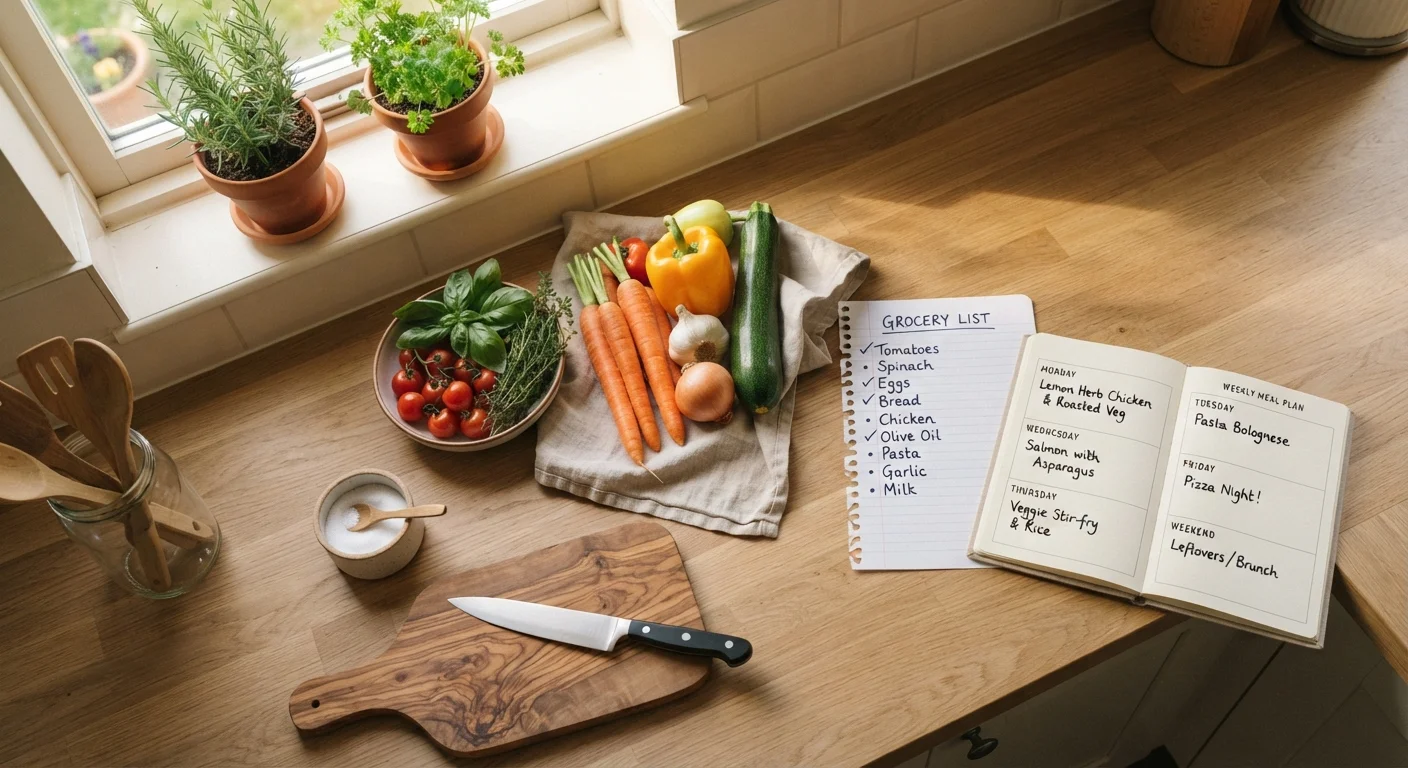
Build a weekly meal plan before you write a shopping list
Shopping without a plan leads to duplicate purchases, ingredient gaps that force extra trips, and produce that never gets used. A plan ties every item on your list to a specific meal, which makes it much harder to overbuy. It also lets you cook in larger batches, reducing per-meal cost.
Let weekly protein sales shape your meals rather than the other way around
Protein is usually the most expensive category in a grocery cart. If you plan meals around whatever protein is at a lower price that week, rather than committing to a fixed protein in advance, you capture savings consistently without eating differently in any meaningful way.
Track what you throw away for two weeks
Most households do not know which foods they consistently waste, which means they keep buying those items at full price and discarding them. A simple running note on your phone identifies the real waste patterns so you can buy less of those items or store them differently.
Buy shelf-stable staples in larger quantities when your storage allows
Rice, dried beans, oats, canned tomatoes, and similar items have a long shelf life and cost less per unit in larger package sizes. Buying more when prices are normal, rather than small quantities repeatedly, lowers the average cost per serving over time.
Store produce correctly to extend how long it stays usable
Produce spoils fast when stored incorrectly, and spoiled produce is money already spent. Different items need different conditions: some vegetables stay fresh longer outside the refrigerator, while others need to be kept away from ethylene-producing fruits like apples and bananas.
Shop with a fixed list and a set spending ceiling, then stop
End-cap displays, checkout lane items, and in-store promotions are placed specifically to prompt unplanned spending. Going in with a written list and a dollar limit makes it easier to recognize when an item is off-plan and decline it without deliberating each time.
Food production at home, even at a small scale, is worth considering alongside these habits. A modest raised bed growing tomatoes, herbs, or lettuce can offset regular produce purchases. The low-cost raised bed guide explains realistic material and soil costs for families starting from scratch.
Quick actions you can take this week
Grocery savings interact with the rest of a household budget in direct ways. If your spending categories feel misaligned with your income, the 50/30/20 rule breakdown explains where food typically fits and where the standard formula often needs adjusting for larger families.
This article provides general financial information for educational purposes only. It is not personalized financial advice. For guidance specific to your household situation, consult a qualified financial professional.
The content provided on our blog site traverses numerous categories, offering readers valuable and practical information. Readers can use the editorial team’s research and data to gain more insights into their topics of interest. However, they are requested not to treat the articles as conclusive. The website team cannot be held responsible for differences in data or inaccuracies found across other platforms. Please also note that the site might also miss out on various schemes and offers available that the readers may find more beneficial than the ones we cover.