

Our Verdict
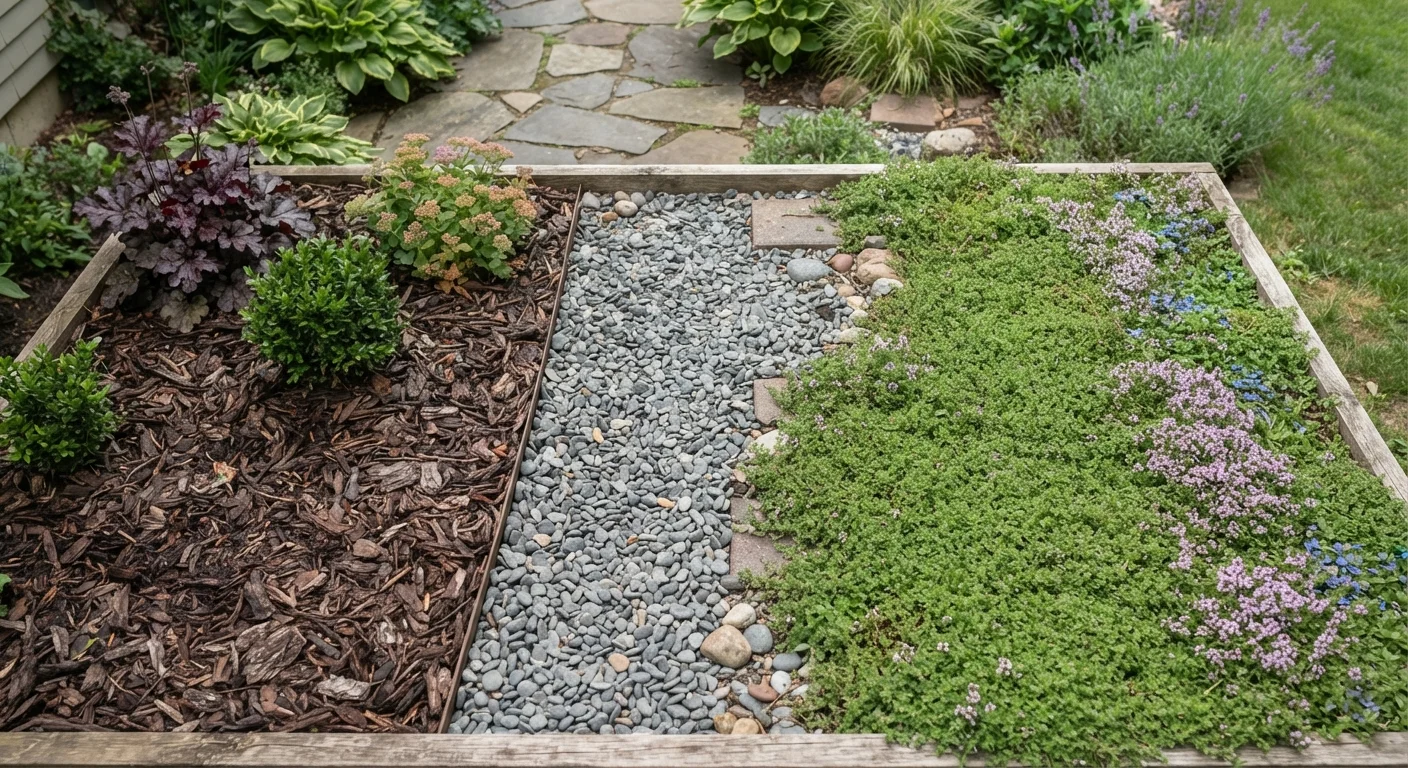
Mulch suits most homeowners who want affordable, flexible coverage and are willing to top it up every year or two. Gravel works well in low-rainfall or high-traffic areas where a permanent, low-labor solution justifies the upfront cost. Ground cover plants offer the lowest long-term spend for those with patience during the establishment phase.
| Best for | Recommended |
|---|---|
| Homeowners wanting low upfront cost and soil benefits | Mulch |
| Those in dry climates seeking a permanent, low-maintenance solution | Gravel |
| Gardeners willing to wait one to two seasons for lasting, self-sustaining coverage | Ground cover plants |
| Families managing large areas on a tight annual budget | Ground cover plants |
What you are actually comparing
When most homeowners pick a ground layer for beds, paths, or bare slopes, they focus on the bag price at the hardware store. That number rarely tells the full story. What matters over three to five years is the total spend, including labor, replacements, and any problems each material tends to cause.
Mulch, gravel, and ground cover plants each address the same basic problems: weed suppression, moisture retention, and bare soil erosion. But they do it through different mechanisms, at different price points, and with different demands on your time. Understanding those differences lets you choose based on your yard's conditions and your actual schedule, not just the sticker price.
For context on how ground layer choices interact with planting beds, see our guide to raised bed materials and soil.
Mulch: affordable to start, recurring to maintain
Wood chip mulch, shredded bark, and straw are the most common choices for garden beds across the US. A 2-inch to 3-inch layer suppresses most annual weeds and slows moisture evaporation noticeably. Bagged mulch typically runs $3 to $6 per cubic foot at retail; bulk delivery from a landscaping supplier can cut that cost by half or more, depending on your area.
The catch is decomposition. Organic mulch breaks down, which is good for soil biology but means you are adding another layer every one to three years. Hardwood bark holds longer than straw or wood chips. Pine bark falls somewhere in between. Each re-application is another purchase and another afternoon of labor.
Mulch also shifts over time on slopes and can wash in heavy rain. Beds near downspouts or on grades steeper than 15 degrees often need edging or a border to hold the material in place, which adds to initial setup cost.
Get bulk mulch to cut material costs
Many municipalities and tree-trimming companies offer free or low-cost wood chips to local residents. A quick call to your city's public works department or a search for local tree services can secure a truckload at little to no cost. The material is coarser than bagged decorative mulch but works just as well for weed suppression and soil improvement in most beds.
On the positive side, decomposing mulch feeds the soil, which reduces the need for fertilizer in beds over time. For family gardens with annuals or vegetables, that soil benefit is meaningful enough to make mulch the practical default.
Gravel: higher start, lower ongoing effort
Pea gravel, crushed granite, and river rock cost more per square foot than mulch, typically $1.50 to $4 per square foot installed, though prices vary widely by region and stone type. The bigger upfront cost comes partly from the material and partly from the need for landscape fabric underneath. Without a barrier, gravel sinks into soil over a few years and weeds push through regardless.
Once installed correctly, gravel needs almost no attention. It does not decompose, it does not wash away in normal rainfall, and it handles foot traffic well. For paths, dry creek beds, or areas where plants are not the goal, gravel often costs less in total over a decade than repeatedly buying and spreading mulch.
The practical limits matter. Gravel is difficult to remove if you change your mind, it gets extremely hot in direct summer sun (a real concern in USDA hardiness zones 8 and above), and it is uncomfortable for children playing nearby. Leaves and debris that fall on gravel are harder to clean than debris on mulch or a lawn area. If you are in a region with high summer temperatures, our overview of water-wise landscaping trade-offs covers how surface materials affect soil temperature and moisture.
| Mulch | Gravel | Ground cover plants | |
|---|---|---|---|
| Upfront cost (per sq ft, approximate) | $0.30 to $1.00 | $1.50 to $4.00 | $0.30 to $0.80 from seed or plugs |
| Lifespan before replacement | 1 to 3 years | Indefinite | Indefinite once established |
| Annual labor demand | Moderate (weeding, topping up) | Low (debris removal only) | Low after establishment |
| Weed suppression | Good with 3-inch depth | Good with fabric barrier | Excellent once plants fill in |
| Soil health benefit | High (feeds soil as it decomposes) | None | Moderate to high depending on species |
| Works on slopes | Fair (can shift or wash) | Good with edging | Excellent once roots establish |
| Ease of removal or change | Easy | Difficult | Moderate (digging required) |
Ground cover plants: slow start, low finish
Creeping thyme, clover, ajuga, vinca minor, and similar low-growing plants require more patience than either mulch or gravel. A newly planted area looks sparse for most of its first season and does not provide solid weed suppression until the plants knit together, typically in 12 to 24 months. During that window, you still need to weed and often need a thin layer of mulch between plants to fill the gaps.
After establishment, most ground covers cost almost nothing to maintain. They do not need replacing, they spread on their own to fill bare patches, and several species (particularly clover) fix nitrogen and improve soil. Watering needs drop once roots are deep enough, though the establishment period usually requires consistent moisture.
The upfront cost depends on how you plant. Starting from seed is cheapest but slowest. Buying plug plants or divisions from a neighbor speeds things up for a modest cost. Spacing plants further apart saves money but extends the bare-patch window. A realistic budget for a 100-square-foot area from plugs runs $30 to $80 depending on species and local nursery prices, which is competitive with two or three seasons of mulch for the same space.
Ground cover is generally not suited to heavy foot traffic areas or to spots with deep shade where few species thrive. Matching species to your regional climate and light conditions is essential before buying anything.
Choosing based on your actual situation
A few practical questions narrow the field quickly. How much time can you spend on the area each year? Gravel and established ground cover ask for very little. Mulch asks for a few hours every season for weeding and replenishment.
What is the slope? Mulch moves on steep grades. Gravel with edging holds better. Ground cover, once established, holds best of all because roots stabilize the soil directly.
Do you want to change the space in a few years? Mulch is easy to shift. Ground cover can be dug out. Gravel is the hardest to remove cleanly once it is settled in.
Many homeowners find that using two materials works well. Gravel on a path or dry corner, ground cover across a larger slope, and mulch in the planting beds where soil health matters most. Combining approaches lets you put each material where it performs at its practical best without committing the whole yard to a single solution.
The content provided on our blog site traverses numerous categories, offering readers valuable and practical information. Readers can use the editorial team’s research and data to gain more insights into their topics of interest. However, they are requested not to treat the articles as conclusive. The website team cannot be held responsible for differences in data or inaccuracies found across other platforms. Please also note that the site might also miss out on various schemes and offers available that the readers may find more beneficial than the ones we cover.