

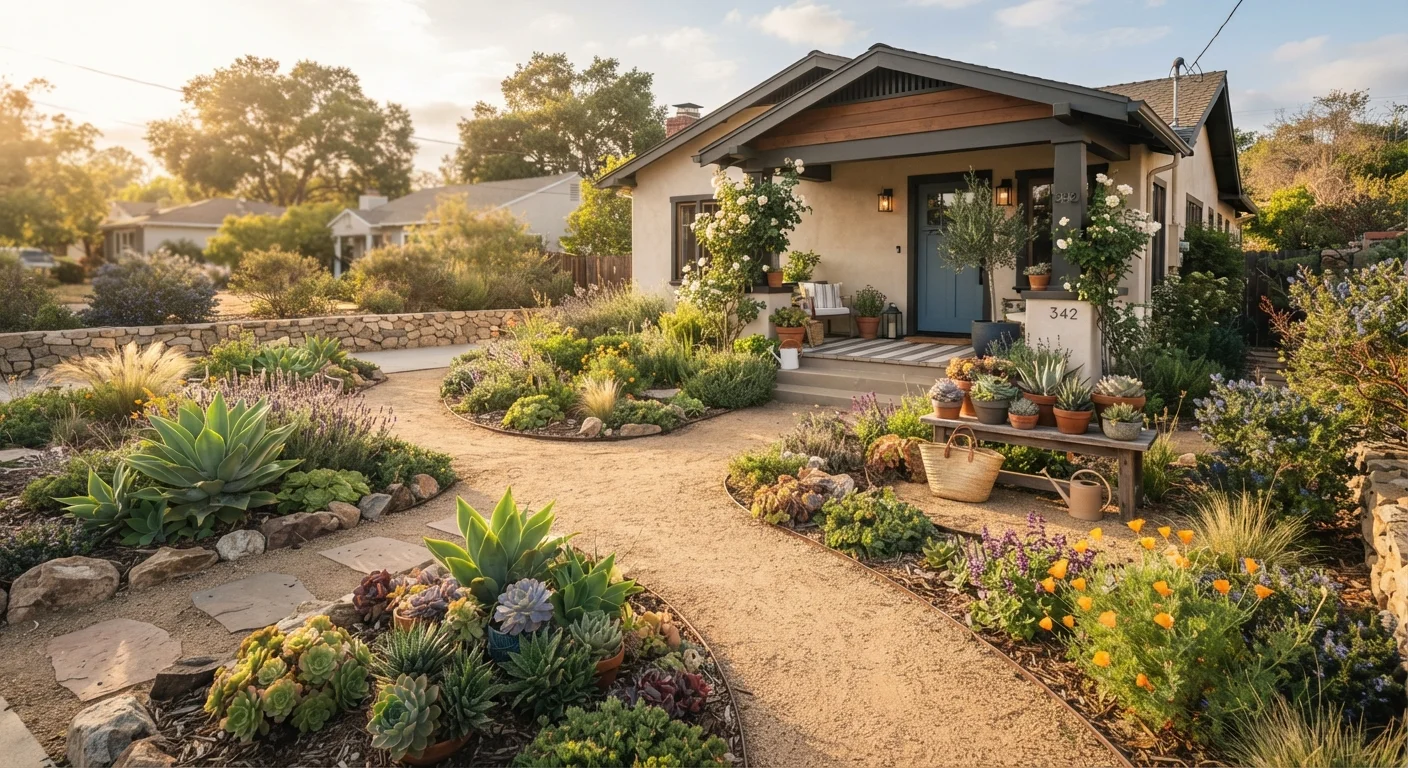
Why these myths keep costing homeowners money
Low-water landscaping sounds simple: choose the right plants, water less, save money. In practice, homeowners routinely spend more than expected because a handful of persistent misconceptions shape the decisions they make at the nursery, at the irrigation supply store, and in the yard itself.
These myths are not harmless. Planting the wrong species in the wrong conditions, skipping soil prep, or misreading what "drought-tolerant" actually means on a plant tag can lead to dead plants, repeat purchases, and water bills that never drop. The corrections below are grounded in established horticultural practice and can apply to most US climate zones.
For anyone already trying to cut household costs across the board, getting landscaping right connects directly to the broader goal. The same discipline behind keeping grocery costs in check applies here: small, consistent decisions compound over time.
Common myths and the facts that replace them
Each myth below reflects a genuine belief held by many homeowners. The corrections are practical and actionable.
Myth
Drought-tolerant plants need almost no water once you put them in the ground.
Fact
Most drought-tolerant plants require consistent watering for their first one to two full growing seasons while their root systems establish.
The term "drought-tolerant" describes a plant's long-term survival ability, not its needs right after transplanting. Roots severed during nursery production need time to spread and anchor. During this establishment period, weekly deep watering is usually necessary. Skipping it causes plant death, which means buying replacements and starting over. Once roots are established, deep but infrequent watering trains the plant to search deeper in the soil profile, which is what makes it resilient later.
Myth
Gravel mulch is always better than organic mulch for saving water in hot, dry climates.
Fact
Gravel can raise soil surface temperatures significantly in direct sun, increasing evaporation and stressing shallow-rooted plants in many US climates.
Gravel does prevent surface evaporation in cooler conditions, but in high-heat regions like the Southwest and Southeast, it absorbs and radiates heat that organic mulch would buffer. A 2-to-3-inch layer of wood chip or shredded bark mulch holds more consistent soil moisture, moderates temperature swings, and decomposes to improve soil structure over time. Gravel works well in desert climates with appropriate plant selections and in pathways where soil temperature is less of a concern.
Myth
Native plants are always the cheapest plants to buy.
Fact
Native plants are often more expensive at the point of purchase than common nursery stock, though they generally cost less to maintain over years.
Propagating native species is more labor-intensive than mass-producing common ornamentals, so retail prices are frequently higher per plant. The long-term math usually favors natives because they need less supplemental water, fewer fertilizer applications, and are less vulnerable to local pests and diseases. Sourcing natives from local native plant societies, university sales, or seed-grown starts can significantly reduce upfront cost without sacrificing the long-term savings.
Myth
You can cut water use simply by watering less often without changing anything else.
Fact
Reducing watering frequency works only when irrigation depth, timing, and mowing height are adjusted at the same time.
Grass and plants adapt to shallow, frequent watering by developing shallow root systems. Cutting frequency without increasing depth per session stresses plants because roots cannot access deeper soil moisture. Watering deeply and less often, early in the morning to reduce evaporation, combined with raising mower blade height to shade soil, allows turf to tolerate longer dry intervals. Without these adjustments, simply turning the timer down leads to brown lawns and replanting costs.
Myth
Low-water landscaping means replacing your lawn entirely with rocks or gravel.
Fact
Reducing lawn area strategically and converting high-use zones to drought-tolerant plants delivers meaningful water savings without full lawn removal.
Full lawn removal involves significant labor and disposal costs and is not necessary to achieve substantial water reduction. Replacing the outer edges of a lawn with drought-tolerant borders, adding a dry creek bed in a drainage path, or converting the parkway strip between sidewalk and street typically targets the highest-water-use areas. These partial conversions reduce irrigation demand while keeping usable lawn space intact for families who use it.
Ground cover choices interact closely with all of these myths. If you are weighing whether to use mulch, gravel, or living ground cover in your low-water design, the trade-offs in cost, labor, and long-term upkeep are worth understanding before you commit. See the full breakdown of mulch, gravel, and ground cover costs for detail on each option.
Soil preparation: the step most homeowners skip
No myth costs more money in the long run than treating soil as an afterthought. Drought-tolerant plants placed in compacted, nutrient-depleted, or poorly draining soil will struggle and die regardless of how well-adapted they are to dry conditions. Amending soil before planting with compost improves both drainage in clay soils and water retention in sandy ones.
A simple soil test, available through most county cooperative extension offices for a low fee, tells you pH and nutrient levels before you spend anything on plants or amendments. Matching your soil amendment strategy to actual test results avoids wasted spending on products your soil does not need.
If you are already comfortable building and filling raised beds, the same soil principles apply. The guide to raised garden beds on a budget covers soil mix ratios that support healthy root systems without overwatering.
Check local watering restrictions before making changes
Many US municipalities, particularly in drought-prone states, have tiered water pricing, mandatory watering schedules, or rebate programs tied to specific landscaping changes. Adjusting your irrigation system or removing lawn without checking local rules first can result in missed rebate opportunities or code violations. Contact your local water utility or city planning office before starting any significant landscape conversion.
The content provided on our blog site traverses numerous categories, offering readers valuable and practical information. Readers can use the editorial team’s research and data to gain more insights into their topics of interest. However, they are requested not to treat the articles as conclusive. The website team cannot be held responsible for differences in data or inaccuracies found across other platforms. Please also note that the site might also miss out on various schemes and offers available that the readers may find more beneficial than the ones we cover.