

Our Verdict
Home grooming is a practical, affordable habit for most families when limited to low-risk tasks: brushing, light bathing, and gentle nail maintenance. The cost savings are real, but they depend on using the right tools and recognizing the clear situations where a professional is the safer choice. Attempting advanced grooming on a dog in pain, with a severely matted coat, or with an unknown skin condition can make problems worse and cost more to fix.
Families with calm, cooperative pets and a willingness to learn basic techniques will get the most value from a home grooming routine.
What home grooming actually involves
Grooming covers a wider range of tasks than most owners realize. At the straightforward end sit brushing, detangling, basic bathing, wiping facial folds, and trimming fur around the paws with blunt-tipped scissors. These tasks require patience and the right equipment, but the margin for error is forgiving.
Further along the difficulty scale are nail trims, ear cleaning, and teeth brushing. Each of these involves anatomy that can be damaged if handled poorly. Nail trims that cut into the quick cause pain and bleeding. Ear cleaning done too aggressively can push debris deeper or cause micro-abrasions. Teeth brushing is genuinely safe to do at home, but only with pet-specific toothpaste; human toothpaste contains fluoride and xylitol, both toxic to dogs and cats.
At the professional end sit hand-stripping, breed-specific styling cuts, dematting severely tangled coats, and anal gland expression. These require training, specialized tools, and an understanding of how to read a stressed animal safely.
The case for grooming at home
Reduces professional grooming costs over time
Handling brushing, bathing, and basic maintenance at home cuts the frequency of paid grooming appointments. For breeds needing grooming every four to six weeks, this can amount to several hundred dollars saved annually.
Builds handling tolerance in pets
Regular home grooming habituates animals to being touched, which makes vet visits and professional grooming sessions easier. Animals comfortable with handling are generally safer to work with.
Allows early detection of health issues
Routine brushing and bathing gives owners the chance to notice lumps, skin changes, ear odor, or parasites before they become serious. Catching these early typically means simpler and less expensive treatment.
Strengthens the bond between pet and owner
Calm, consistent grooming sessions are a form of handling that many animals respond to positively. Dogs in particular often settle during brushing when the owner is steady and unhurried.
The financial argument for home grooming is straightforward. Professional grooming for a medium-sized dog can run $50 to $90 per session, and many breeds need attention every four to eight weeks. Spreading those visits out by handling maintenance tasks at home can reduce annual grooming costs substantially.
Beyond cost, regular handling at home helps pets stay comfortable with being touched. Dogs and cats that are brushed and handled from a young age tend to be calmer at vet appointments and grooming visits. This matters practically: a cooperative animal is safer and less stressful for everyone involved. For families considering the broader picture of pet ownership costs, managing routine pet expenses is one area where consistent effort at home pays off over time.
Where home grooming creates risk
Risk of injury from nail trimming errors
Cutting into the quick, the blood vessel inside the nail, causes pain and bleeding. In dark-nailed dogs the quick is invisible, making it easy to cut too far without training or proper lighting.
Wrong products can irritate or harm pets
Human shampoos, conditioners, and ear cleaners are formulated for a different skin pH than dogs and cats. Using them can strip protective oils, trigger allergic reactions, or in the case of certain ingredients, cause toxicity.
Matting requires professional tools and skill
Attempting to remove severe mats with household scissors risks cutting the skin, which sits just beneath the tangled fur. Mats can also conceal wounds or infections that need medical attention.
Anxious or reactive pets pose safety risks
A dog or cat that bites or scratches when stressed can injure both itself and the owner during grooming. Professionals are trained to read stress signals and manage restraint safely.
Upfront tool costs offset early savings
A quality brush, nail grinder, and appropriate shampoo require an initial investment. Families who groom infrequently may not recoup this cost compared to occasional professional visits.
The risks in home grooming are specific, not general. Most accidents happen in a handful of scenarios: cutting a nail too short, using the wrong product on sensitive skin, or attempting to demat a coat that has progressed beyond what a brush can fix.
Severe matting is worth examining in detail. Mats that sit close to the skin trap moisture, restrict circulation, and can hide skin infections or wounds underneath. Trying to cut or pull them out at home without professional clippers and experience can cut the skin, which often sits right against the mat. A groomer or vet may need to shave the coat entirely and assess the skin condition below.
Anal gland expression: a task for professionals
Anal glands are small sacs on either side of a pet's rectum that can become impacted or infected. External expression at home, as shown in many online videos, often fails to fully empty the glands and can cause irritation. If your pet is scooting, licking the area excessively, or producing an unusual odor, a veterinarian should evaluate the glands before any home treatment is attempted. Internal expression is a veterinary or trained groomer procedure only.
Anal gland expression is another task that owners sometimes attempt at home after watching online tutorials. External expression, done incorrectly, can leave glands incompletely emptied or cause irritation. Internal expression requires a veterinarian or trained groomer. If a dog is scooting regularly, a vet visit to rule out infection or impaction is the right first step, not a home remedy.
When to call a professional groomer or vet
A few situations make professional help the clear choice, regardless of a family's comfort level with home grooming.
- The coat is severely matted and the skin cannot be seen clearly beneath the tangles.
- The pet shows signs of pain, fear, or aggression during any grooming task.
- There is visible skin irritation, unusual odor from the ears, or discharge from the eyes that does not resolve after a gentle wipe.
- The breed has specific grooming requirements tied to coat type (double-coated breeds, wire-haired terriers, poodle-mix coats) that require specialized techniques.
- Nails have grown so long they curve or touch the ground, as these may require more careful trimming and assessment of nail bed health.
A licensed veterinarian is the right call when grooming reveals something physical: a lump, a wound under matted fur, inflamed skin, or any sign that the animal is in discomfort beyond simple grooming anxiety. Grooming is a health checkpoint as much as a cosmetic routine, and owners who pay attention during sessions catch problems early. For families thinking about the full spectrum of responsible pet ownership, upfront decisions about the type of pet often determine how complex grooming needs will be.
Building a practical home grooming kit
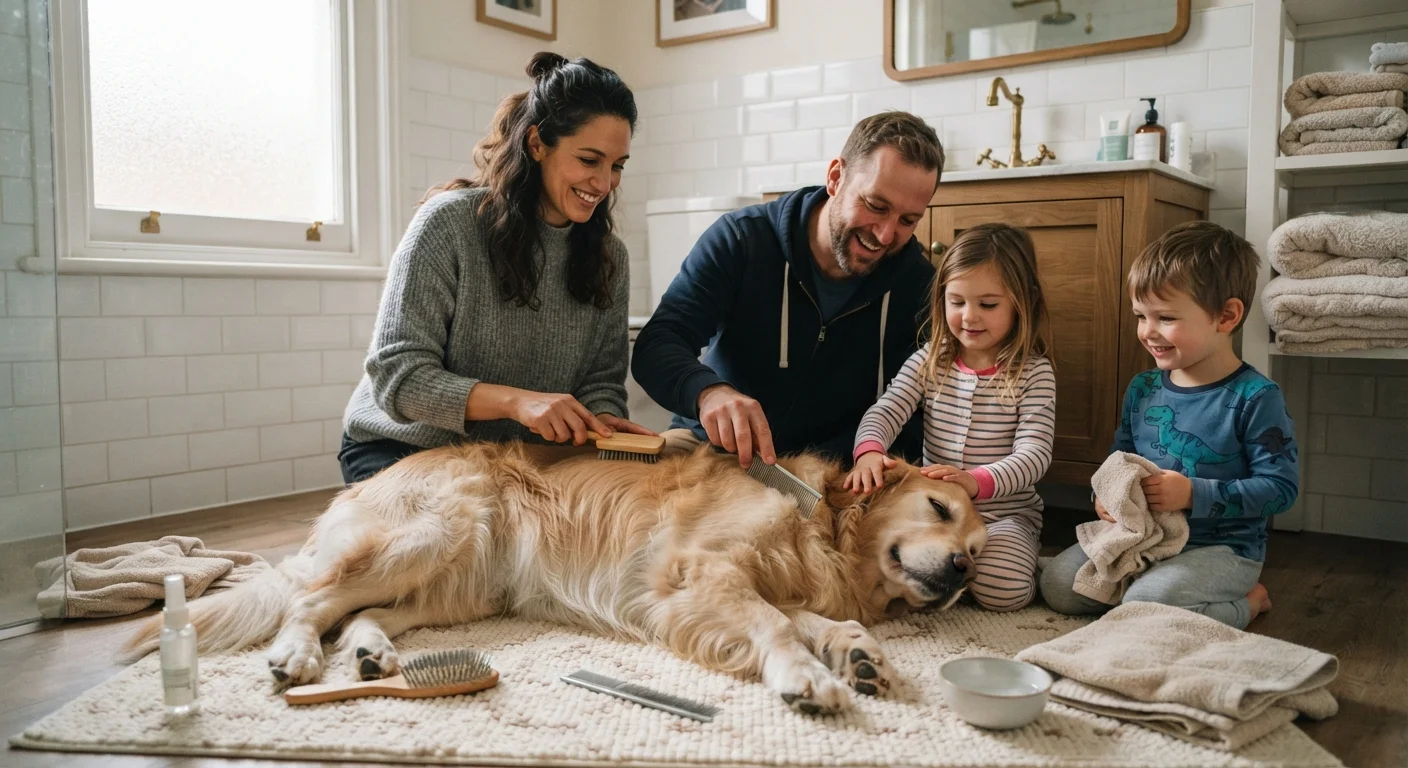
The right tools make a measurable difference. A slicker brush and a metal comb cover most coat types. For nail maintenance between professional trims, a nail file or grinder with a low vibration setting is gentler for pets that react poorly to clippers. Blunt-tipped scissors handle paw fur and around the face. A pet-specific shampoo matched to the animal's coat type avoids skin reactions that a human shampoo would cause.
Start sessions short. Five to ten minutes of brushing with a calm, consistent approach builds tolerance over time. Rewarding with a small treat afterward conditions the animal to associate grooming with something positive, which reduces resistance at future sessions. This is especially worth doing with young animals, but older pets can adapt too with enough patience and consistency.
This article is for general informational purposes only and does not constitute veterinary advice. Consult a licensed veterinarian for guidance specific to your pet's health and needs.
The content provided on our blog site traverses numerous categories, offering readers valuable and practical information. Readers can use the editorial team’s research and data to gain more insights into their topics of interest. However, they are requested not to treat the articles as conclusive. The website team cannot be held responsible for differences in data or inaccuracies found across other platforms. Please also note that the site might also miss out on various schemes and offers available that the readers may find more beneficial than the ones we cover.