

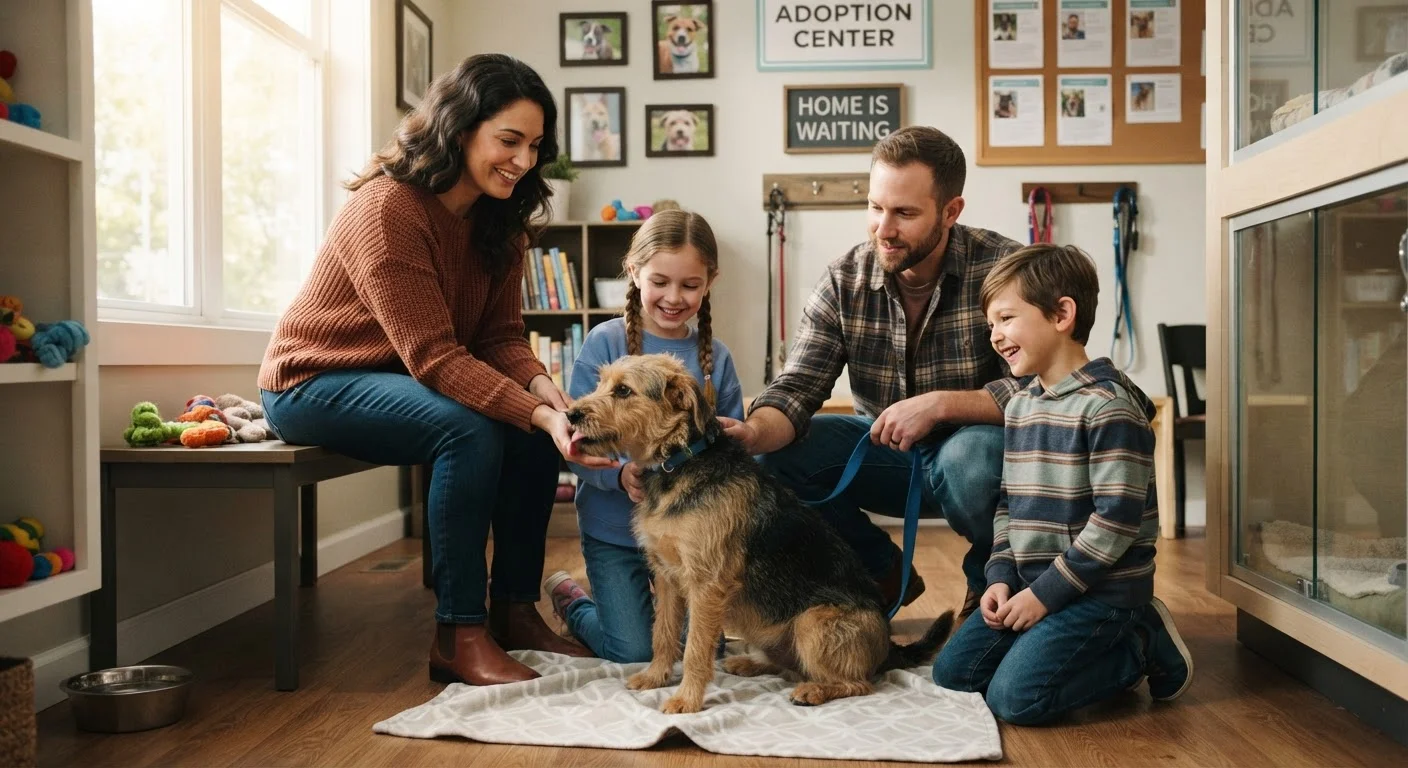
Option A
Shelter adoption
The community-centered, lower-upfront-cost path to pet ownership.
Best for: Families open to mixed breeds or adult animals who want lower initial fees and to give a pet a second chance.
Option B
Buying from a breeder
The predictable-traits, higher-investment route to a specific breed.
Best for: Families who need a specific size, temperament, or hypoallergenic coat and are prepared for higher upfront costs.
What you actually pay upfront
The gap between adoption and purchase costs is real. Most animal shelters and rescue organizations charge adoption fees between $50 and $300. That fee generally covers spay or neuter surgery, core vaccinations, a microchip, and sometimes a starter bag of food. When you add those services up separately, they can easily exceed $500 at a private vet clinic.
Buying a puppy or kitten from a breeder is a different financial commitment. Depending on the breed, a dog from a reputable breeder commonly costs anywhere from $800 to well over $3,000. That price may or may not include first vaccines or a vet health check, so families should ask exactly what is included before agreeing to a price. For a fuller picture of what pet ownership costs beyond the acquisition fee, see our plain-language cost breakdown by animal.
| Criterion | Shelter adoption | Buying from a breeder |
|---|---|---|
| Typical upfront cost | $50 to $300 | $800 to $3,000+ |
| Vaccines/spay/neuter included | Usually yes | Varies by breeder |
| Breed predictability | Low to moderate | High |
| Age options | Puppy, adult, senior | Primarily young animals |
| Genetic health screening | Rarely available | Should be provided |
| Behavioral history known | Partial (assessment done) | Parental traits documented |
| Training needs | Varies; adults often trained | Higher for young animals |
| Ongoing annual costs | Similar to breeder pet | Similar to adopted pet |
Health considerations for each path
A common assumption is that purebred animals from breeders are healthier. The reality is more complicated. Many purebred dogs carry heritable conditions tied to their breed, such as hip dysplasia in large breeds or brachycephalic airway issues in flat-faced breeds. A responsible breeder will provide documented genetic health screenings for both parents and offer a written health guarantee. Families should ask to see those test results, not just take a seller's word for it.
Shelter animals can arrive with unknown histories, which introduces some uncertainty. However, most shelters conduct behavioral assessments and vet checks before placing animals. Adopting an adult dog or cat means you can often see its actual temperament rather than guessing based on breed averages. Mixed-breed animals may also benefit from what geneticists call hybrid vigor, though this is not a guarantee of good health.
Whichever route a family takes, a vet exam within the first week of bringing a pet home is a sound practice. Early detection of any underlying issues protects both the animal and the family's finances.
Time, training, and lifestyle fit
Puppies and kittens, whether from a breeder or a shelter, demand significant time. House-training a puppy realistically takes weeks to months. Families with full-time work schedules and young children should think honestly about who will handle the daytime care and training during that period.
Adult shelter animals often skip that phase entirely. A three-year-old shelter dog that is already crate-trained and leash-comfortable can fit into a busy household much faster than a puppy. That practical advantage is worth weighing against any preference for raising a pet from infancy.
Breed-specific rescue organizations occupy a middle ground worth knowing about. These groups pull specific breeds from shelters or owner surrenders, so families can target a particular breed's traits while still paying adoption-level fees. A search through PetFinder or Adopt-a-Pet can surface breed-specific rescues in most regions of the country.
For families preparing for the full scope of what comes after the decision, our guide for first-time pet owners covers setup costs, vet basics, and day-one logistics in detail.
Spotting red flags in both markets
Not every entity calling itself a rescue is reputable, and not every breeder selling online is responsible. Families should visit in person whenever possible. A legitimate shelter will allow you to spend time with an animal before committing. A responsible breeder will want to meet you, ask about your home environment, and let you see where the animals live and meet at least one parent.
Warning signs on the breeder side include unwillingness to provide health documentation, multiple litters always available, and pressure to purchase quickly. On the rescue side, watch for organizations that refuse home visits, cannot explain an animal's behavioral history, or have animals living in unsanitary conditions.
The financial discipline that applies to other big household decisions applies here too. Rushing a decision because an animal is described as urgent often leads to a poor fit and higher long-term costs. The same careful evaluation framework used for any significant purchase, as outlined in this checklist for evaluating major purchases, translates well: ask detailed questions, verify claims, and do not let emotion override due diligence.
This article is for general informational purposes only. Consult a licensed veterinarian for advice specific to your pet's health needs and circumstances.
The content provided on our blog site traverses numerous categories, offering readers valuable and practical information. Readers can use the editorial team’s research and data to gain more insights into their topics of interest. However, they are requested not to treat the articles as conclusive. The website team cannot be held responsible for differences in data or inaccuracies found across other platforms. Please also note that the site might also miss out on various schemes and offers available that the readers may find more beneficial than the ones we cover.