

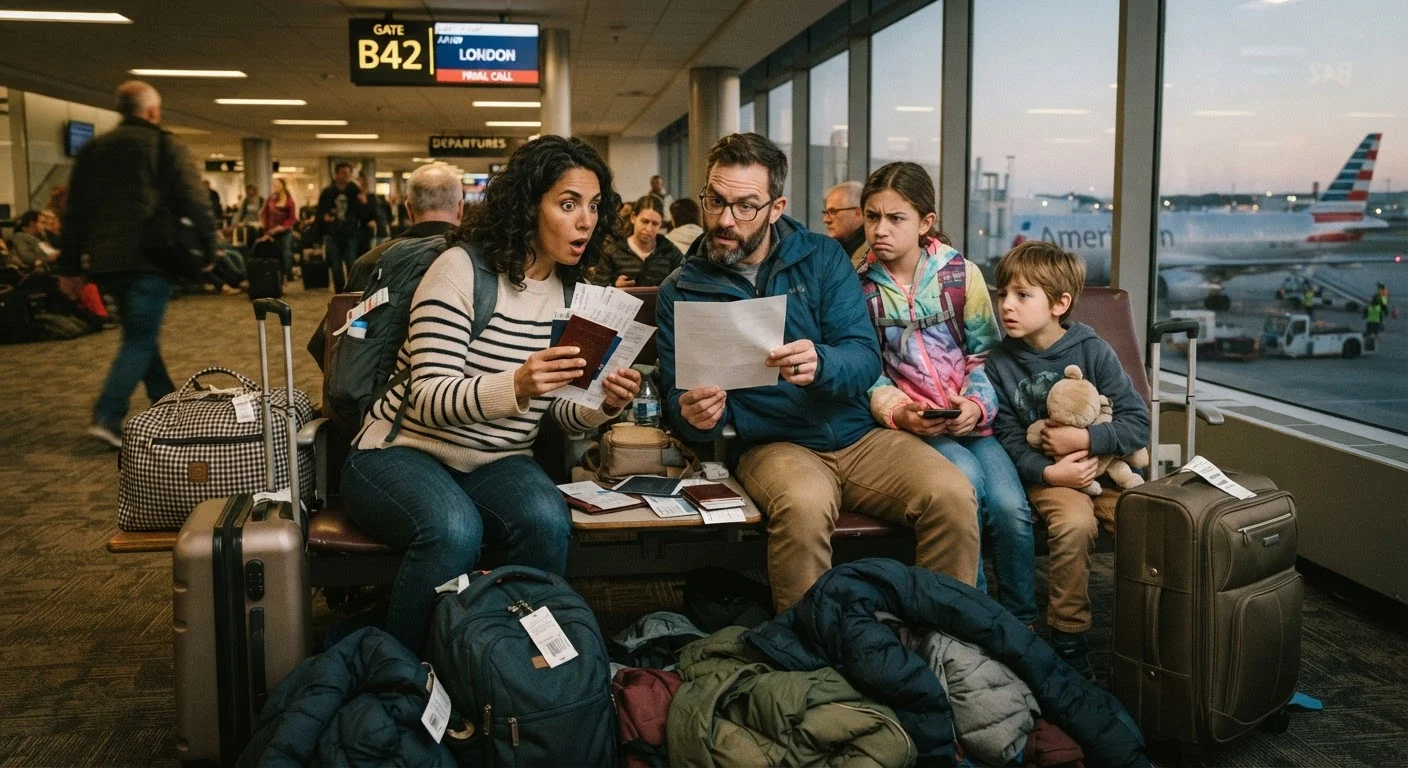
Why the advertised price is almost never the full price
Families often build a vacation budget around the numbers that appear on booking sites: the flight fare, the nightly hotel rate, the rental car quote. Those figures are real, but they are not complete. A trip that looks like a $3,000 commitment on screen can quietly become $4,500 or more once every line item is counted. Understanding which costs stay hidden until checkout (or later) is the first step toward building a budget that actually holds.
This is not about avoiding travel. It is about going in with a full picture so the fun does not come with a financial hangover. The complete family travel planning walkthrough covers the broader budgeting process, but the mistakes below are the specific costs that catch families off guard most often.
Ignoring resort fees and destination charges added at check-in.
Why it happens: Hotels advertise a nightly rate that excludes mandatory fees, which can add $25 to $50 or more per night. Families book on price alone and do not see the full charge until arrival.
Underestimating airline baggage fees for a family of four.
Why it happens: A fare that looks reasonable often covers only a personal item. Families traveling with children need checked bags, car seats, and sometimes strollers, each of which may carry a separate charge.
Skipping advance ticket purchases for major attractions.
Why it happens: Families assume they can pay at the gate, not realizing that theme parks, museums, and popular sites often charge more for same-day tickets and may sell out during busy periods.
Forgetting parking, tolls, and local transportation costs.
Why it happens: Ground transportation feels secondary when you are focused on flights and hotels. Urban destinations and resort areas often charge $30 to $60 per day for parking, and toll roads add up quickly on road trips.
Underbudgeting for meals and dining gratuities at tourist destinations.
Why it happens: Restaurant prices at popular travel destinations are often 30 to 50 percent higher than what families pay at home. Gratuities on a table of four add another 18 to 22 percent to every meal.
Missing travel insurance or pet care costs in the total budget.
Why it happens: Travel insurance feels optional until something goes wrong, and pet boarding or sitting costs are often calculated late in the planning process when the main budget is already set.
How to build a buffer that actually works
Once you know where the gaps appear, the fix is straightforward: add a 15 to 20 percent buffer to every major budget category, not just the total trip cost. If flights and hotel come to $2,000, set aside an additional $300 to $400 for that category alone. Do the same for food, activities, and transportation.
A simple spreadsheet with columns for estimated cost, actual cost, and the difference between the two takes about 20 minutes to build and can save you from mid-trip panic. Some families find it easier to convert the whole trip budget into a daily spending number so everyone knows what a reasonable day looks like on the ground.
$100+
Daily resort fees at some US properties
Consumer advocacy groups have documented mandatory resort fees exceeding $100 per night at some US hotels and resorts, separate from the advertised nightly rate.
4x
Baggage charges per family vs. per person
A family of four with one checked bag each can pay four times the per-person baggage fee, a cost that is easy to miss when comparing headline fares.
15-20%
Recommended travel budget buffer
Travel finance educators commonly suggest adding 15 to 20 percent to each budget category to cover fees, gratuities, and unplanned expenses on family trips.
Before you confirm any reservation, read the full property or carrier details for fees, not just the summary price. The pre-trip checklist for budget-conscious families has a section specifically for verifying charges before departure. For families weighing lodging options, all-inclusive resorts vs. independent travel breaks down what each approach actually costs when you include these extras. And if you have flexibility on dates, traveling in the shoulder season can reduce the base costs that these surprise fees are layered on top of.
This article provides general travel budgeting information for educational purposes. Prices, fees, and policies vary by provider and change over time. Verify all costs directly with airlines, hotels, and service providers before booking.
The content provided on our blog site traverses numerous categories, offering readers valuable and practical information. Readers can use the editorial team’s research and data to gain more insights into their topics of interest. However, they are requested not to treat the articles as conclusive. The website team cannot be held responsible for differences in data or inaccuracies found across other platforms. Please also note that the site might also miss out on various schemes and offers available that the readers may find more beneficial than the ones we cover.